

September 29, 2026
Marine Heating Systems: Why They Matter in Western Washington
Marine heating systems make a boat’s cabin more comfortable during cool-weather trips, early departures, and overnight stays. For Western Washington boat owners, dependable heat can make spending time aboard more appealing well beyond summer. Keeping that heat reliable means paying attention to the equipment, its installation, and its service requirements.
Whether your boat has a Webasto heater or another system, start with what is installed and how you use it. A heater that struggles to start or repeatedly shuts down deserves attention before your next trip—not after you arrive at an anchorage expecting a warm cabin.
Why Cabin Heat Matters on Puget Sound
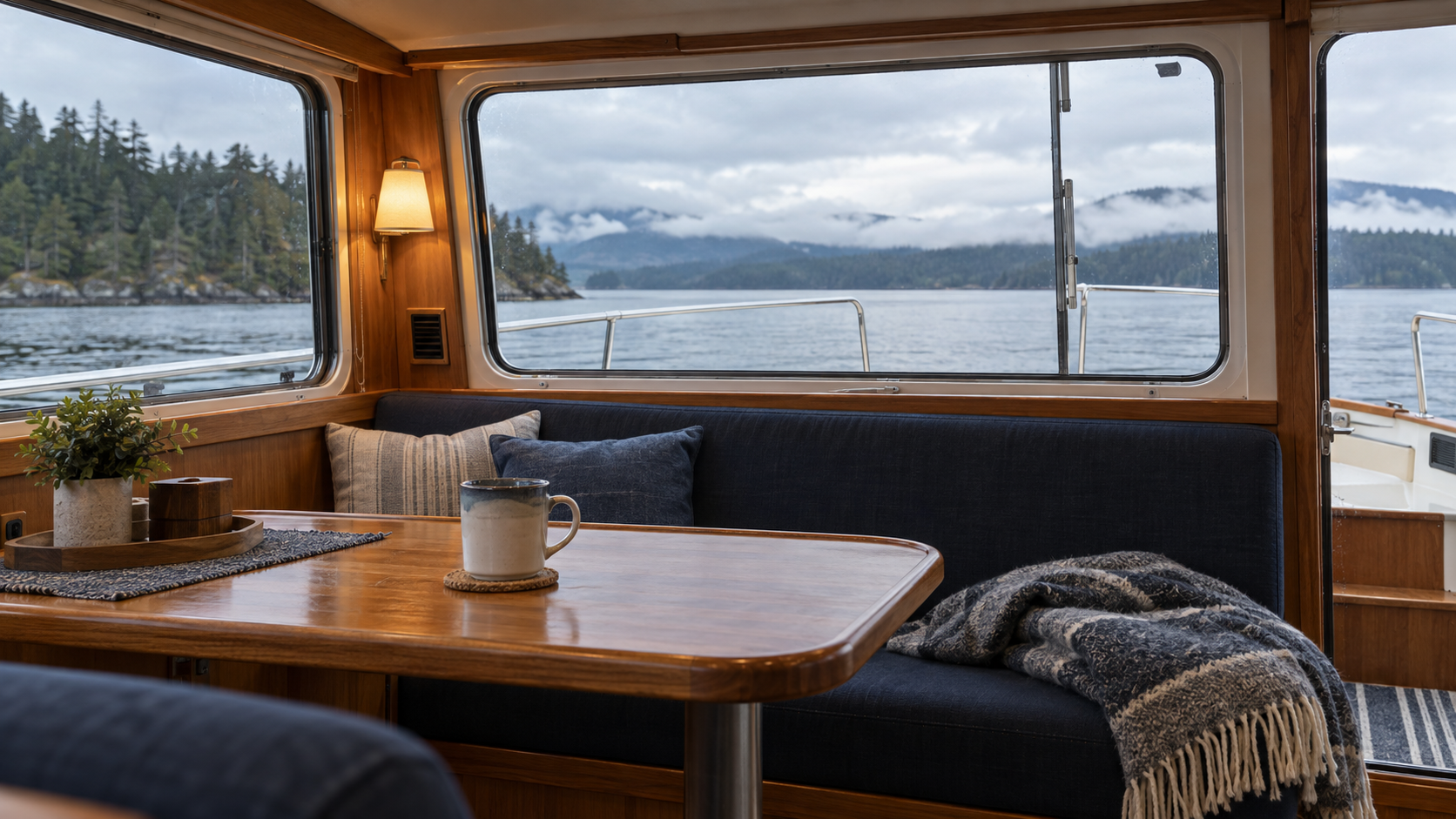
A cool morning at the dock feels different when you have a comfortable place to prepare for the day. The same is true after a damp afternoon on the water, when everyone heads below with wet jackets and cold hands.
Dependable cabin heat can help you enjoy those parts of boating that happen between destinations: making breakfast, checking the forecast, sharing a meal, or staying aboard overnight. For owners who use their boats through fall and winter, the heater becomes part of planning a comfortable trip.
That makes a pre-season check worthwhile. If the system has been unused for months, find its operating instructions and address overdue maintenance before you start relying on it regularly.
Know Which Marine Heating System You Have
Two common approaches are forced-air heating and hydronic heating. Understanding the difference helps you describe a problem and plan service.
Forced-air heaters
A forced-air heater warms air and distributes it through ducts and cabin outlets. Webasto’s marine Air Top range is an example. The heater’s location and the way air reaches the occupied spaces are part of the overall system—not just the temperature setting on the controller.
Hydronic heaters
A hydronic system heats liquid in a circulating loop, which supplies heat to cabin heat exchangers or radiators. Depending on the installation, the system may also support domestic hot water. Cabin heating and hot-water functions should be confirmed for the particular boat; one does not automatically mean the other is installed.
Webasto’s marine heating overview includes both air and water-based systems. The brand name alone does not identify which type you have or what maintenance it needs.
Before arranging work, photograph the heater’s identification label and controller. Include the model and serial number if they are accessible without removing covers or dismantling equipment.
Warmth and Moisture Control Are Different Jobs
Heating can help reduce condensation by warming cold surfaces, but it does not automatically remove moisture from a cabin. Wet clothing, cooking, and water leaks still need attention. A warm cabin with damp lockers or persistent condensation needs more than a higher thermostat setting.
Use appropriate ventilation, deal with leaks, and consider dehumidification when needed. The EPA’s moisture-control guidance explains the relationship between surface temperature, ventilation, and condensation. Those physical principles are useful aboard, although its guidance is written for buildings rather than marine installations.
Keep the distinction practical: use heating for comfort and address the source of unwanted moisture. Do not block required ventilation to keep the cabin warmer.
When to Arrange Marine Heating Service
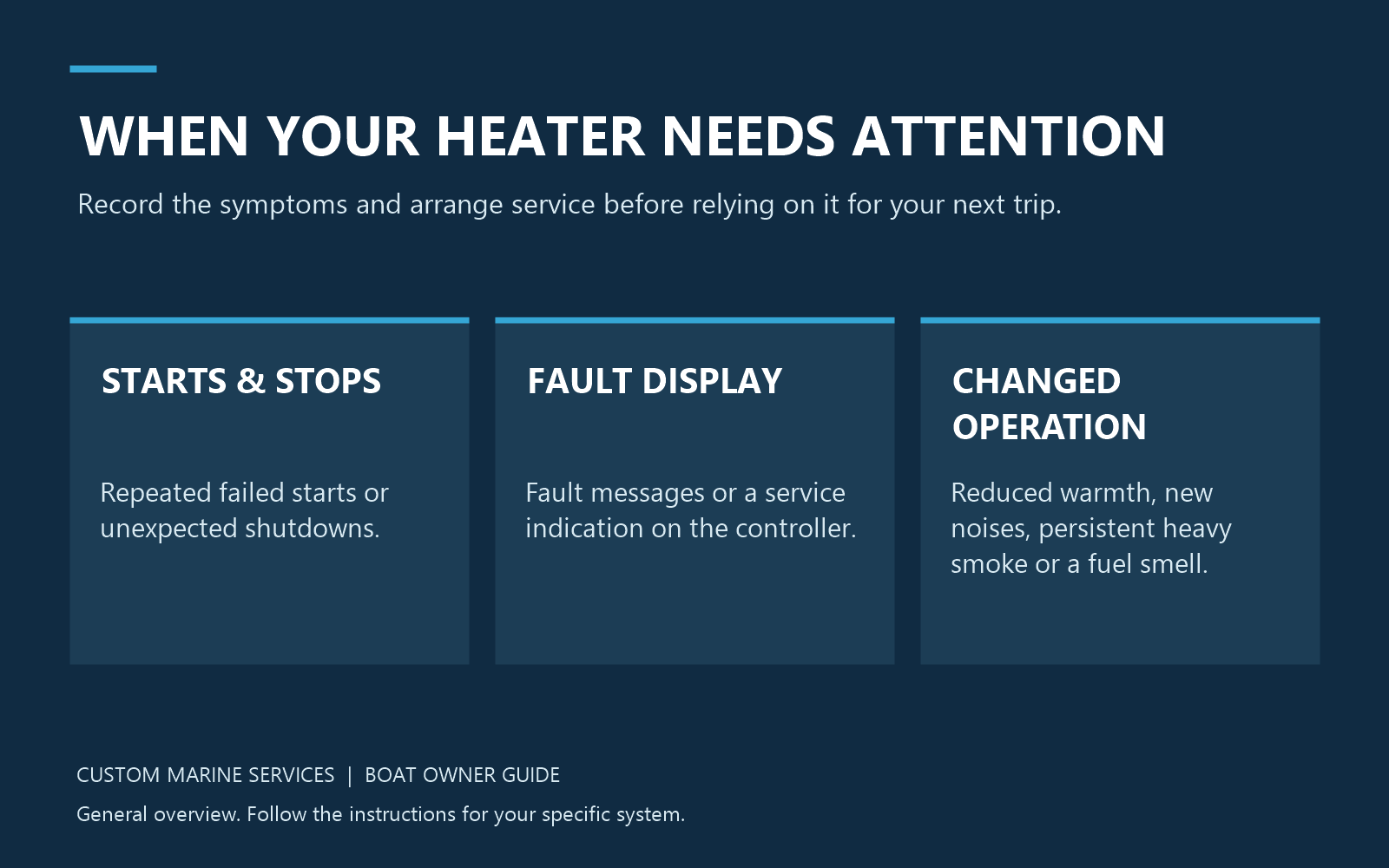
Record changes in how the heater behaves. Useful details include whether it starts, how long it runs, what the controller displays, and which areas of the boat receive heat.
Contact a service provider when you notice:
- Repeated failed starts or unexpected shutdowns.
- Fault messages or a service indication on the controller.
- A noticeable decline in cabin warmth or air delivery.
- New noises, persistent heavy smoke, or a fuel smell.
These observations help describe the problem; they do not identify a failed part by themselves. Avoid repeatedly restarting a faulty heater to see whether it will eventually stay on.
Webasto’s Air Top 2000 STC operating instructions identify persistent heavy smoke, unusual burner noise, fuel smell, and repeated fault shutdowns as reasons to take that heater out of service and contact a service workshop. Follow the safety and shutdown instructions for your exact model.
If other equipment also loses power or behaves unpredictably, mention it when booking. Our guide to signs of boat electrical problems explains why those symptoms deserve attention too.
What to Know About Webasto Marine Heater Service
Start with the model-specific manual rather than a general internet maintenance schedule. As one example, Webasto calls for a professional check of the Air Top 2000 STC at the beginning of the heating period. Other models and installations need their own instructions checked.
The installation matters as well as the heater. Webasto’s marine air-heater installation manual addresses fuel supply, electrical connections, heating-air distribution, combustion air, and exhaust routing. A service conversation should account for the system fitted to the boat, rather than assuming the heater unit is the only possible source of trouble.
For an existing system, bring its service history and describe any recent changes aboard. For a new installation or replacement, explain which spaces you want heated and whether you normally stay at a powered dock or spend time away from shore power. Ask the provider to confirm support for your heater model and the proposed work.
Keep Exhaust Safety and Winterization Separate From Comfort
A fuel-burning heater needs a properly installed exhaust system. Cabin warmth is not evidence that the installation is safe.
Maintain fresh-air circulation and working marine carbon monoxide alarms. Never ignore an alarm. If one sounds, move everyone to fresh air and follow the alarm’s emergency instructions; seek emergency assistance if exposure is suspected. The U.S. Coast Guard’s carbon monoxide guidance explains why ventilation and maintained alarms matter aboard.
Cabin heat also should not be treated as a substitute for engine or plumbing winterization. Protection depends on each system’s preparation, not simply whether the living space feels warm. Our article on when to winterize a boat in Western Washington covers that separate seasonal decision.
Marine Heating Questions
Q: How often should a Webasto marine heater be serviced?
A: Follow the instructions for the exact heater model and installation. For example, Webasto’s Air Top 2000 STC manual calls for a professional check at the beginning of the heating period. Faults or unusual operation may require attention sooner. Confirm the applicable schedule with a provider who supports your model.
Q: Will a marine heater stop condensation inside my boat?
A: Heating can help by warming cold surfaces, but it does not automatically remove moisture. Ventilation, leak repairs, drying wet materials, and appropriate dehumidification may also be needed. Persistent condensation deserves investigation even when the cabin feels warm.
Q: What information should I provide when requesting marine heating service?
A: Include the boat’s make and model, the heater’s make, model and serial number if accessible, and a description of the problem. Photos of the controller display and identification label are useful. Note recent service or electrical changes and ask the provider to confirm support for that heater.
Plan Ahead for Comfortable Time Aboard
Custom Marine Services installs and services diesel heaters as part of its marine electrical and onboard equipment services in Stanwood, serving Western Washington boat owners.
If your heater needs attention or you are considering an upgrade, call 360.540.2689 or submit a marine heating service request. Share your boat details, heater make and model, and any symptoms so we can discuss the appropriate next step.
A little planning before the next cool-weather trip gives you time to address heating concerns while the boat is still at the dock.
